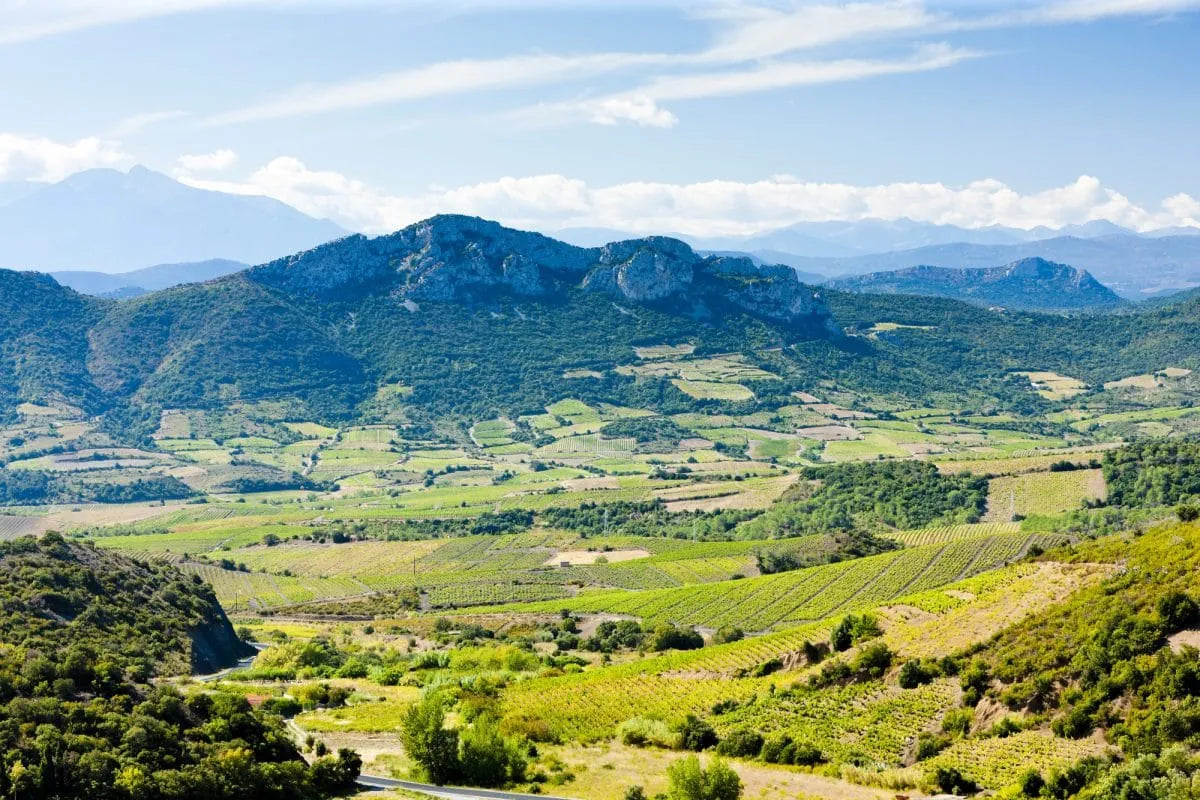
Our Languedoc-Roussillon Wines
The Languedoc-Roussillon is authenticity in its purest form. From the foothills of the Pyrenees to the Mediterranean beaches, this land of sun and wind offers us wines that reflect its character: generous, expressive, and full of personality. A region where thousand-year-old tradition and innovation blend together for our greatest pleasure. Would you like to discover this jewel of southern France?
AOP Banyuls Roussillon, France
Côtes Catalanes, France
AOP MAURY Roussillon, France
Maury Sec AOC Languedoc-Roussillon, France
AOP BANYULS Roussillon, France
AOP RIVESALTES Roussillon, France
Our Languedoc-Roussillon Wines
Between the Mediterranean and the Pyrenees, Languedoc-Roussillon tells a thousand-year history of wine. Since the first vines planted by the Greeks in the 8th century BC, this sun-drenched region has continuously reinvented itself, evolving from mass production to character-filled wines that today rival the greatest.
Languedoc: Land of Diversity and Innovation
Multiple Terroirs for Wines with Character
Languedoc distinguishes itself through the richness of its terroirs, offering a unique palette of expressions:
- The limestone slopes of Terrasses du Larzac
- The schist soils of Faugères
- The rocky terraces of La Clape
- The volcanic terroirs of Picpoul de Pinet
Emblematic Appellations of Languedoc
- Corbières: Generous reds with hints of garrigue
- Minervois: Tamed power, with notes of spices and black fruits
- Saint-Chinian: Balance between freshness and structure
- Faugères: The mineral expression of schist
- Pic Saint-Loup: The freshness of Languedoc highlands
Roussillon: Between Sea and Mountains
A Unique Terroir
Roussillon benefits from an exceptional microclimate, shaped by:
- The maritime influence of the Mediterranean
- The protection of the Pyrenees
- The Catalan winds that purify the vineyard
Distinctive Appellations
- Collioure: Character-filled reds and elegant rosés
- Maury Sec: The power of black schist soils
- Côtes du Roussillon Villages: The expression of hillside terroirs
- Banyuls: The great oxidative natural sweet wine
- Côtes Catalanes IGP: Modern wines with a mediterranean accent
Natural Sweet Wines: A Unique Heritage
A Centuries-Old Tradition
VDNs (Vin Doux Naturel) constitute a precious heritage of Roussillon, produced according to the mutage method:
- Stopping fermentation by adding wine alcohol
- Preserving the natural sugars of the grape
- Traditional aging in oxidative or non-oxidative environments
Different Styles
- White VDNs
- Red VDNs
Perfect Pairings
- Muscat de Rivesaltes: Fruit desserts, foie gras
- Banyuls: Dark chocolate, red fruit desserts
- Rivesaltes Ambré: Blue cheese, dried fruit desserts
Star Grape Varieties of the Region
Reds
- Grenache Noir: Warmth and fruit
- Syrah: Structure and spices
- Carignan: The historical soul of the region
- Mourvèdre: Power and character
Whites
- Grenache Blanc and Gris: Roundness and finesse
- Picpoul: Marine freshness
- Muscat: For legendary natural sweet wines
- Vermentino: Mediterranean elegance
Regional Food and Wine Pairings
Traditional Pairings
- Picpoul de Pinet with Bouzigues oysters
- Corbières red with cassoulet
- Minervois with Corbières lamb
- Banyuls with chocolate cake
The Future of the Region
Languedoc-Roussillon continues its quest for excellence through:
- Commitment to sustainable viticulture
- Exploration of exceptional terroirs
- Adaptation to climate change
- Valorization of indigenous grape varieties
FAQ
Q: What is the main difference between Languedoc and Roussillon wines?
A: Languedoc primarily produces dry wines with a wide variety of styles, while Roussillon is historically renowned for its natural sweet wines, although it also produces excellent dry wines.
Q: What are the best recent vintages?
A: 2019, 2020 for their balance, 2016-2017 for their concentration and freshness, 2015 as a great vintage for aging.
Q: How should natural sweet wines be served?
A: Muscats at 8-10°C, Banyuls and Maury between 14-16°C for the more complex ones.