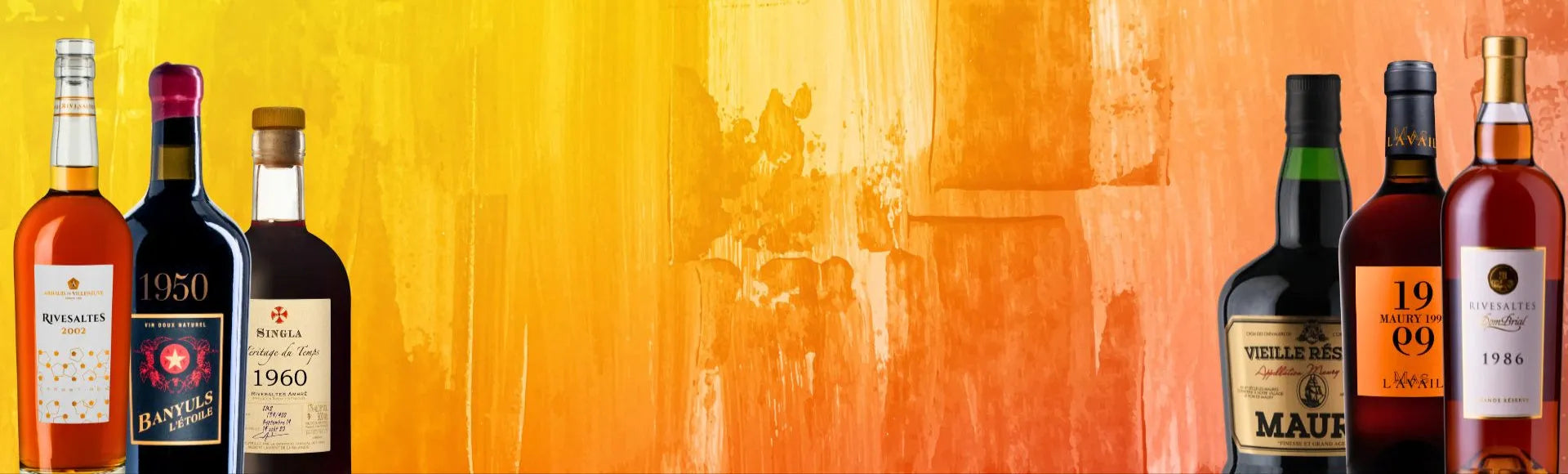
Vintage Vins Doux Naturels from Roussillon – A Journey Through Time
Among the hidden treasures of French vineyards, Roussillon sweet wines (Vins Doux Naturels) hold a special place. Created through the art of mutage, invented in the 13th century, these fortified wines from France preserve the grape’s natural sweetness while developing extraordinary complexity through decades of aging.
Bruno Cazes, oenologist and specialist in Roussillon terroirs, presents an exceptional collection of vintage wines spanning nearly a century—from 1925 to 2015.
The Five Iconic Appellations of Roussillon
Banyuls wine: steep schist terraces overlooking the Mediterranean produce powerful, deep red dessert wines with extraordinary aging potential.
Banyuls Grand Cru: the most prestigious expression, aged at least five years, renowned for its unmatched complexity.
Maury wine: black schist soils and sunny climate give rise to intense fortified red wines, often marked by cocoa and dark fruit aromas.
Rivesaltes wine: a diversity of styles (Ambré, Tuilé, Grenat), with golden or copper hues and flavors of dried fruits and spices.
Muscat de Rivesaltes: aromatic and fresh, with notes of citrus, honey, and white flowers—an elegant French Muscat sweet wine.
👉 Discover more about each appellation in our dedicated pages.
Winemaking Tradition: Mutage and Long Aging
The secret of Vins Doux Naturels lies in mutage, the traditional winemaking technique that halts fermentation and preserves natural sugar. Afterward, the wines undergo long and unique aging processes: in oak casks, old barrels, or glass demijohns exposed to the sun. This controlled oxidation imparts their distinctive aromas and complexity, making Roussillon fortified wines unlike any others in the world.
A Distinctive Taste: Rancio and Balance
Vintage VDNs display an exceptional flavor profile: dried fruits, nuts, roasted coffee, candied orange peel, and the famous rancio character—a noble oxidative note that adds salinity and depth. Balanced between sweetness, freshness, and power, they stand among the most unique French dessert wines.
Extraordinary Aging Potential: Over 100 Years
Some vintages can be cellared for more than a century without losing brilliance. A bottle of vintage Roussillon wine makes an extraordinary gift for a birthday, wedding, or birth year—an authentic piece of French wine history.
Exceptional Vintage Collection
Bruno Cazes has assembled the world’s largest collection of vintage Vins Doux Naturels. Highlights include:
A 1925 Maury wine, nearly 100 years old, a rare piece of liquid heritage.
A 1966 Banyuls Traditionnel, awarded 20/20 by La Revue du Vin de France.
A 1945 vintage wine, aged by the Mediterranean, symbolizing rebirth after World War II.
Food Pairings for Vintage VDNs
Aperitif: a refreshing Muscat de Rivesaltes.
Main course: bold pairings with curry, Asian cuisine, or game in chocolate sauce.
Cheese: Roquefort, Bleu d’Auvergne, or aged Comté with Rivesaltes Ambré.
Dessert: dark chocolate, candied citrus, dried fruit cakes with Banyuls or Maury.
Digestif: a meditative wine to savor slowly.
FAQ – Vintage Vins Doux Naturels
What is a Vin Doux Naturel?
A Vin Doux Naturel is a French fortified sweet wine made by adding neutral alcohol during fermentation (mutage). This preserves natural grape sugars while allowing the wine to age gracefully for decades.
What’s the difference between Banyuls, Maury, and Rivesaltes?
Banyuls: intense fortified wines from the Mediterranean coast, ideal with chocolate.
Maury: bold sweet red wines with cocoa and black fruit notes.
Rivesaltes: the widest range of styles, from golden Ambré to ruby Grenat.
How long can a VDN age?
A vintage Vin Doux Naturel from Roussillon can age for over 100 years, making it one of the longest-lived wines in the world.
Why offer a vintage VDN as a gift?
Because it’s a time capsule. A birth-year wine or anniversary vintage is both meaningful and unforgettable.
How to store an opened bottle of VDN?
Thanks to their richness and structure, these wines keep very well once opened—often several weeks to months when properly resealed and stored cool.